
(To see other currencies, click on price)
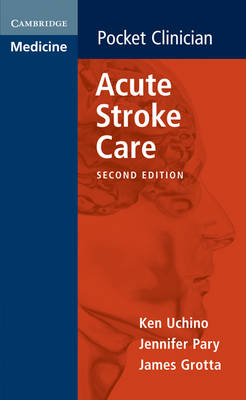
MORE ABOUT THIS BOOK
Main description:
You have just encountered a possible stroke patient. You ask yourself: what should I do first? How do I know it is a stroke? Is it too late to reverse the damage? How do I do the right things in the right order? This book will help you answer these critical questions. It provides practical advice on the care of stroke patients in a range of acute settings. The content is arranged in chronological order, covering the things to consider in assessing and treating the patient in the emergency department, the stroke unit and then on transfer to a rehabilitation facility. All types of stroke are covered. This new edition provides updated information from recently completed clinical trials and added information on endovascular therapy, hemicraniectomy for severe stroke, DVT prophylaxis and stroke prevention. A comprehensive set of appendices contain useful reference information including dosing algorithms, conversion factors and stroke scales.
Contents:
Preface; Abbreviations; 1. Stroke in the emergency department; 2. What to do first; 3. Ischemic stroke; 4. TPA protocol; 5. Neurological deterioration in acute ischemic stroke; 6. Ischemic stroke prevention: why we do the things we do; 7. Transient ischemic attack; 8. Intracerebral hemorrhage; 9. Subarachnoid hemorrhage; 10. Organization of stroke care; 11. Rehabilitation; Index.
PRODUCT DETAILS
Publisher: Cambridge University Press
Publication date: March, 2011
Pages: 234
Dimensions: 108.00 x 176.00 x 13.00
Weight: 220g
Availability: Not available (reason unspecified)
Subcategories: Neurology
From the same series







CUSTOMER REVIEWS
Review from the first edition: '… the authors reach their goal of guiding doctors through the vast amount of literature on stroke: the book is handy and very clearly written and will help general practitioners, residents and expert clinicians in their daily practice with stroke patients. We recommend the book to all doctors who are looking for a prompt access guide for diagnosis and treatment of stroke.' Antonio Carolei, European Neurology