
(To see other currencies, click on price)
MORE ABOUT THIS BOOK
Main description:
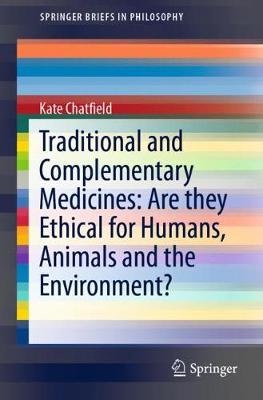
This book provides a systematic analysis of the ethical implications of traditional and complementary medicine (T&CM), focusing on pragmatic solutions. The author uses a bioethical methodology called the "Ethical Matrix," to consider the impact of T&CM use for animals and the environment as well as for humans.
A systematic search of the literature reveals that most published ethical concerns are related to the safety of T&CM use for humans. However, application of the Ethical Matrix demonstrates that the ethical implications for T&CM use are much broader. In this book, the author analyses the most serious implications, including adverse events related to homeopathy, the use of animals in T&CM products, and the impact of herbal medicine on the environment. Comparisons with the ethical implications of conventional biomedicine help readers to contextualise debate, and highlight aspects that may be unique to T&CM.
Globally, many high-level health policy makers promote T&CM as an accessible and affordable healthcare option. However, their use is considered by some to be a waste of resources, unscientific, and unethical. Offering a frank analysis of this largely ignored field of healthcare ethics, this book is both timely and essential. It helps patients, policy makers, practitioners, researchers, and students gain the knowledge they need to make more informed decisions.
Contents:
Forward
Ethical issues in traditional and complementary medicines - The need for a calm assessment
References
Chapter 1. Defining traditional and complementary medicine
Abstract
1.1 What's in a name?
1.2 The differences between T&CMs and conventional medicine
1.3 A pragmatic approach
1.4 The T&CM family
1.5 A global perspective
1.6 T&CM usage
1.7 T&CM benefits
1.8 T&CM controversy
References
Chapter 2: Defining health
Abstract
2.1 Setting aims and objectives in health care
2.2 The World Health Organization's definition of health
2.3 What does health look like?
2.4 Towards a new definition of health
2.5 The implications of the new, Huber et al. definition of health
References
Chapter 3: An ethical matrix for traditional and complementary medicine
Abstract
3.1 The ethical matrix
3.2 The conceptual basis of the ethical matrix
3.3 The ethical matrix in this analysis
3.4 The next steps
References
Chapter 4: Ethical challenges for humans using traditional and complementary medicines
Abstract
4.1 Adverse effects in medicine
4.2 Safety in the conventional healthcare system
4.3 Safety in T&CM
4.4 Adverse drug reactions and herbal medicine
4.5 Addressing the ethical challenges
4.6 Adverse events and homeopathy
4.7 Addressing the challenges
References
Chapter 5: Ethical challenges for animals from traditional and complementary medicine
Abstract
5.1 Animals in the ethical matrix
5.2 The use of animals in conventional medicine
5.3 Animals, T&CM and wellbeing
5.4 Animal ethics
5.5 Ethical analysis: The use of animals in T&CM products
5.6 Recommendations for the use of animals in T&CM products
References
Chapter 6: Ethical challenges for the environment from traditional and complementary medicine
Abstract
6.1 Humans and the environment
6.2 Analysing the environmental impacts of Western herbal medicine
6.4 Future-proofing T&CM
References
Ethical challenges for humans
Ethical challenges for the environment
Ethical challenges for animals
Conclusion
References
PRODUCT DETAILS
Publisher: Springer (Springer Nature Switzerland AG)
Publication date: December, 2018
Pages: 105
Weight: 454g
Availability: Available
Subcategories: Complementary Medicine