
(To see other currencies, click on price)
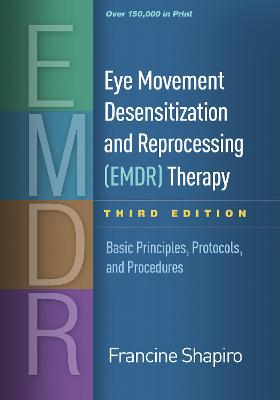
MORE ABOUT THIS BOOK
Main description:
*Bestselling title with over 100,000 in print, updated: 40% new material reflects over 15 years of advances in the therapy, including findings from controlled studies.
*Expanding market: beyond PTSD, EMDR is now being used to effectively treat complex trauma, anxiety, depression, addictions, and more.
*Widely studied, EMDR is recognized as effective by the U.S. VA/DOD, American Psychiatric Association, ISTSS, WHO, and health care institutes of Australia, France, Germany, Israel, the Netherlands, Northern Ireland, and the UK.
*The definitive clinical reference and training tool; workshops on the therapy are conducted worldwide.
Contents:
1. Background
2. Adaptive Information Processing: The Model as a Working Hypothesis
3. Components of EMDR Therapy and Basic Treatment Effects
4. Phase One: Client History
5. Phases Two and Three: Preparation and Assessment
6. Phases Four to Seven: Desensitization, Installation, Body Scan, and Closure
7. Working with Abreaction and Blocks
8. Phase Eight: Reevaluation and Use of the EMDR Therapy Standard Three-Pronged Protocol
9. Standardized Protocols and Procedures for Special Situations
10. The Cognitive Interweave: A Proactive Strategy for Working with Challenging Clients
11. Selected Populations
12. Theory, Research, and Clinical Implications
References
Appendix A. Clinical Aids
Appendix B. Client Transcripts
Appendix C. Clinical and Outcome Assessments
Appendix D. Research Lists
Appendix E. Client Safety
Appendix F. EMDR Therapy Training Resources
Index
PRODUCT DETAILS
Publisher: Taylor & Francis (Guilford Press)
Publication date: January, 2018
Pages: 600
Weight: 940g
Availability: Available
Subcategories: Accident & Emergency Medicine, Psychotherapy